Tuesday, January 29, 2013

Thoughts on On*****Media

After reading Hovagimyan's article I came to conclude four things:

  1. Art is a form of language
  2. If we are moving into the so called "Post Media" environment as he expresses in the article, art will always be evolving and therefore no same reproduction will exist. 
  3. Every medium has one main purpose or use: to communicate
  4. Art is a representation of life.
Throughout the article Hovagimyan presents several examples such as Film and Photography that prove art is a medium though which humans communicate. When we look at a film, whether it has sound or it is silent, there is always a meaning, an idea or a message that the director is trying to get across. In a picture, as Hovagimyan mentions, the photographer tries to capture a mood by altering light and filters. People often believe photographs present the actuality of reality in a more natural and truthful way. Perhaps he felt the need of expressing the symbolic language of representational painting can't be compared with the information of a photograph. 
Another point which I would really like to cover is how the basis of multimedia rose from film, which is a field that derive from a combination of mediums (sound, theatre, painting) that all came together to create a form of expression. I thought this was very interesting because there is no other form of art that uses more than one medium other than film. 
After reading such informative article about various media forms, I came to finally understand this term. Like Zoe, I am still not so sure about what the author is trying to imply with the term "Post Media". What I gather from the last sentences is that since our civilization is every day becoming more and more technologically-based "computer logarithms" will "create or manifest the forms of art". Human society will somehow become an extension of such technological advancements and in the future, rather than making art directly, humans will use technology as a medium to communicate and share ideas, thoughts beliefs, art.
Here is the link to a video of McCluhan explaining briefly what he means by "The Medium is the Message". 

Hovagimyan's Article - Kevin's Response

The first aspect of this article that I found interesting was when the author explained the differences between how people react to paintings compared to photographs. He brings up an example about war and battle. Once photography took over and became extremely popular, it took away all of the realism any painting had. The author talks about how you can no longer immerse yourself into a painted battle scene when there are photos of war that are more realistic. Its true that people do not relate as well to paintings and drawings compared to photographs, but I believe paintings and drawings still have certain aspects that help the mediums stay alive. Painting and Drawing show physical skill and a strong devotion to the art. Although a photograph is more realistic it doesn't always show me that the artist put time and effort into the work.
I liked how the author talked about all of the different mediums as art including the telegraph. His retold story of Alexander Graham Bell and Watson was a nice touch to this article. I learned something new. Although it seemed like it was out of place, it was a very good example to show how even the telegraph was used as an art form at some point in history.
Lastly, what caught my eye, was the last paragraph.  It sums up Hovagimyan's views in a short paragraph.  The author believes society is moving away from "playback culture" and towards "post media." We are taking what was done by hand and turning it into generative art using computers or technology.  In "post media" the art is created through technology, computer algorithms and less human intervention.  I believe this is true, this is what society is becoming.  I have mixed feelings on whether this is a good thing or not.  Although with current technology it is easier to reproduce art and create "fakes" but innovation in general is a positive.  We now have the capability to create art that could not have been created post 21st century.  

This website lets you create your own generative art.  The computer is using countless algorithms to create the art but all you have to do is drag the cursor.

Generative Art


Monday, January 28, 2013

ON ******* MEDIA (Zoé)


After reading this essay, I have a greater understanding of the effects media had on the world in the 20th century; but, I’m confused what the author’s definition is for “Post Media.” I need a different explanation for how “computer algorithms [will] create or manifest the forms of art.” Because, frankly, this sounds a little bit less like art and more like a science fiction movie. The authors definition is rather ambiguous, but from the final paragraph I believe that the introduction of the internet could serve this idea of “Post Media.”
The definition I found suggests that Post media is, “art that is made using electronic media technology.” Well that’s great and all, but I wonder how far this line of what we call ‘art’ goes. Because the term Media covers many areas such as newspaper, so does post media include this non-stereotypical ‘art’ form? 
The author gives two vague details to the idea of Post Media, both of which include newspaper’s internet cousins. First, the art is ever changing. Second, there is no “master or subsequent copies.” The first example that came to mind is Wikipedia, which is user contributed, edited, and constantly updated. It makes me squirm a little to put Wikipedia in the same grouping as fine art and radio (my two favorite things), but it is the 21st century version of an encyclopedia, and due to it’s ever changing nature, another news source. Unlike a Britannica or The New York Times, the pages are never sent to print. When the information changes the page does, and there is no value given into the first edition of the page. Because of these things it is the perfect and clear example of a Post Media art form. 
Now that that’s all cleared up, I do have a few unanswered questions. Is the definition of this author, and the internet source I found, popularly agreed upon, or is it still up in the air? And due to it’s collaborative nature, has anyone taken up the title of Post Media artist? 

Here's a video by Francis Alÿs. I really like this piece because the action itself is rather banal, but the background actions keep you engaged. 


Response to Hovagimyan

I'm not entirely sure I understand Hovagimyan's assertion about the movement into a "'post media' information environment." I disagree with his assertion that "we are moving away from recording," unless I'm taking it too literally. I think, as a society, we are moving towards recording more and more useless things (and uploading them to youtube).
The only idea I had that vaguely supports Hovagimyan's notion is the realization that all forms of media are becoming digitized. We are scanning newspapers, publishing e-books, making movies on digital cameras, and recording sound digitally. Therefore, all media is becoming stored as data, thus homogenizing the various types of art we have. However, this suggests that all art is constantly moving forward. For better or for worse, this is untrue. Not all media is made digitally, nor do I believe there will be a day when that is true. Also, the preservation of the past (newspapers, movies, pictures) by digitization is not an exact copy. The original will always be better than the digital version.
Hovagimyan makes a comment about generative art, music and theater (something I had to look up and came to understand through wikipedia and the video below). I don't believe that generative art is the future of all art. Computers open up a new form of expression, like celluloid film opened up photography to the masses and allowed for motion pictures to be produced. However, the creation of film did not render paint useless, it simply, as Hovagimyan notes, forced painting to become more abstract. We don't remember the 20th century as a century void of painters, but of a period rich in different movements within the realm of painting. Similarly, we won't remember the 21st century solely for the role of computers in art (the exception being the digitization of other art forms that I just discussed).

Here is a video I watched that helped me understand generative art:

Frozen in time.


While Hovagimyan’s article examines several types of multimedia, the most interesting his segment on photography. He highlights how one of the main efforts when taking a photograph is to express a feeling that has been frozen in time. This is accomplished through various lighting and filters, or through the cultural impact of a specific photo.
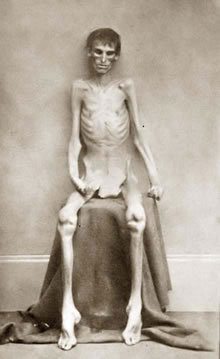
The most intriguing part of this is how single moments in time often shorter than a second can have an immense social impact. Such is the trend with Mathew Brady’s war documentary photographs. Shown below is a photograph he took of a prisoner of war. The picture itself is shocking, not only because of the state of the subject, but because at first you don't know what you are looking at--it could be a person or a skeleton etc. More important than the pictures themselves, are the cultural impact Brady's photos had. As the article states, the pictures didn't stop people from going to war, merely they stopped people from glamorizing war in visual media. Again the amazing part of this is that such a tiny segment of time can have such a widespread impact.


A separate expample that comes to mind is the photograph of the Afghan girl by Steve McCurry. This is one of the most recognized photographs ever, and became a symbol of the late 1980's. The photo itself is striking, mainly because of the girl's piercing stare. Again though, the photo is important because it brought awareness to the middle east, not just because it beautiful.


Audacity 2.0.3

The manual for the newest version of Audacity